CICO Explained: Calories In, Calories Out
Here is the straight answer. CICO is not a weight-loss strategy. CICO is the physics underneath every diet. Energy balance decides your weight. The diet you pick is just a way to stay in a deficit you can actually keep.
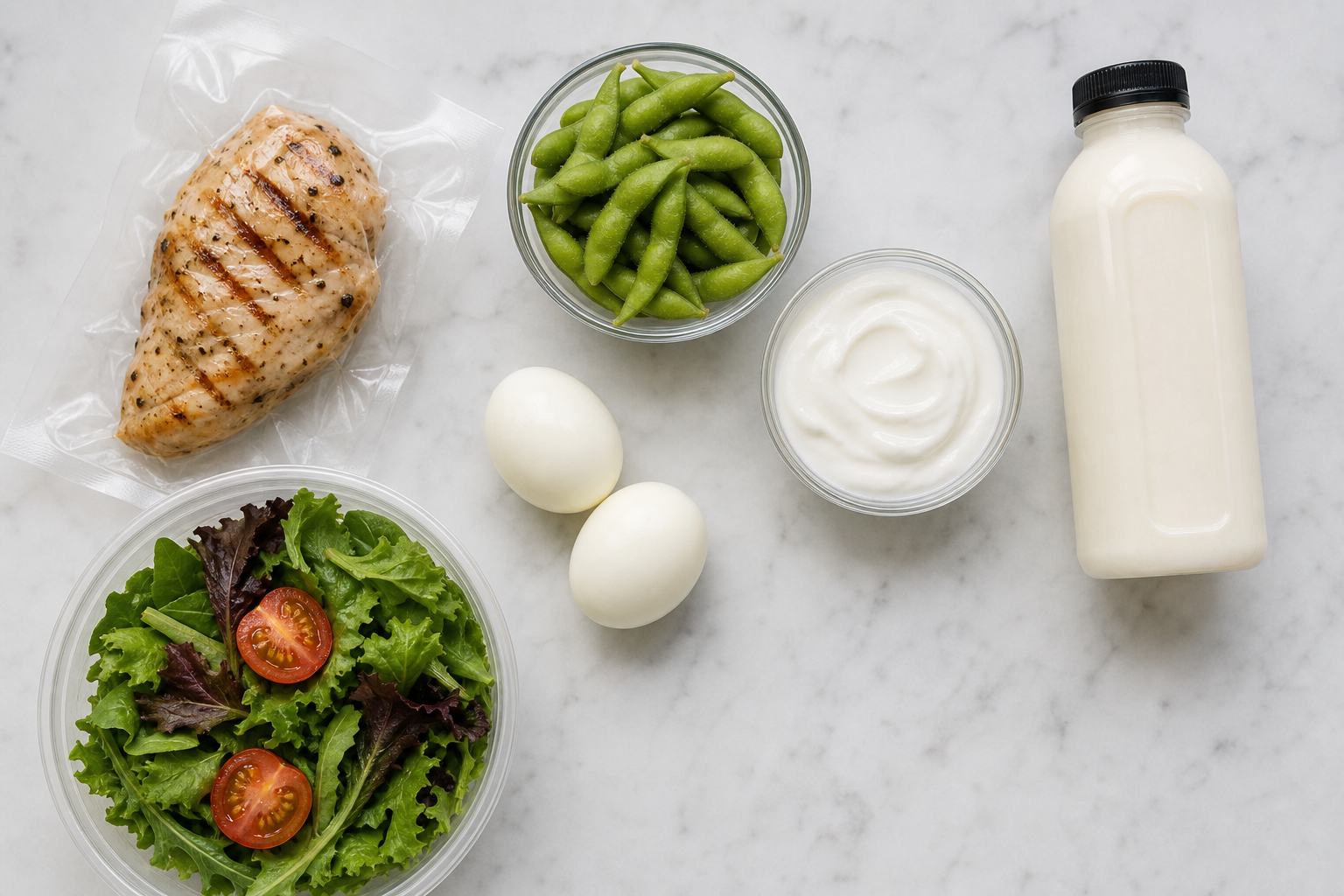
If you searched CICO explained, you probably ran into people arguing about it like it is a brand of diet. It is not. CICO stands for calories in, calories out. It is the accounting that sits under keto, fasting, low-carb, high-protein, and yes, convenience eating. You do not "go on" CICO. You are already on it, the same way you are already on gravity.
So the useful question is not "does CICO work." It does, in the boring physical sense. The useful question is "which method keeps me in a small calorie deficit without making me miserable." That is a behavior question, not a physics question.
What CICO actually means
Calories in is the energy you eat and drink. Calories out is the energy your body spends in a day. When in is bigger than out, you store the surplus, mostly as fat. When out is bigger than in, you pull from storage and you lose weight. When they roughly match, your weight holds. That is the whole law.
For scale: one kilogram of body fat is worth roughly 7700 kcal. It is a rule of thumb, not a precise constant, but it tells you why fat loss is slower than the scale-on-Monday version in your head. A 500 kcal daily deficit is real work, and it adds up to somewhere near half a kilogram of fat a week. That is normal, not a failure.
Notice what CICO does not say. It does not say carbs are evil, that you must skip breakfast, or that one food makes you fat on its own. Those are method-level claims. CICO sits one level below all of them.
Why "CICO doesn't work for me" is usually a measurement problem
When people tell me CICO does not work for them, the metabolism is almost never broken. The measurement is. Both sides of the equation are hard to read accurately, and the errors all point the same way.
On the calories-in side, people quietly undercount. The oil in the pan, the splash of milk, the bites while cooking, the weekend that does not get logged, the "medium" portion that is actually large. None of it feels like cheating. It just does not get counted. Studies on self-reported intake have shown people can be off by hundreds of calories a day without lying once.
On the calories-out side, people overcount. A fitness tracker says a workout burned 600 kcal, so the day feels like a big deficit, and then dinner quietly fills it back in. The watch is guessing. The physics is not wrong. The inputs you fed it were soft.
This is why I keep coming back to behavior over willpower and environment over discipline. If your kitchen, your commute, and your default snacks make undercounting easy, that is a design problem, not a character flaw. Fix the environment and the numbers get honest on their own.
Calories out has four parts
"Calories out" is not just the gym. It is four things, and the gym is the smallest of them for most people.
- BMR (basal metabolic rate): the energy to keep you alive at rest. Breathing, heart, organs, brain. This is the biggest slice, often 60 to 70 percent.
- TEF (thermic effect of food): the energy spent digesting what you eat. Protein costs the most to process, which is one honest reason high-protein eating helps.
- NEAT (non-exercise activity): walking, fidgeting, standing, chores, all the movement that is not formal exercise. This is the slice that quietly drops when you eat less and feel tired, and it is why deficits sometimes stall.
- Exercise: deliberate training. It matters for health and muscle, but as a share of the daily total it is usually smaller than people assume.
The practical point: you cannot reliably out-train a loose diet, because the exercise slice is small and NEAT can shrink to compensate. Most of the lever is on the plate.
CICO vs the diet you choose
Here is the cleanest way to hold it. The diet you choose is the how. CICO is the why.
| The method (how) | What it actually does |
|---|---|
| Keto / low-carb | Cuts a whole food group, which often lowers total intake. The deficit does the work. |
| Intermittent fasting | Shrinks your eating window, so fewer meals, often fewer calories. The deficit does the work. |
| High-protein | Keeps you full and protects muscle, so the deficit is easier to hold. Still a deficit. |
| Convenience eating | Removes decisions and cooking friction, so the right portions repeat. Still a deficit. |
Every row ends the same way: a calorie deficit you could keep. None of these methods beat physics. They are delivery mechanisms for staying under your calories out without thinking about it every minute. If you want to see your own number, start with our TDEE calculator, then pick whichever method makes hitting that number boring.
The honest takeaway
Pick the method you will actually adhere to. That is the entire game. The "best" diet is not the one with the prettiest mechanism, it is the one you are still doing in week twelve. For a lot of people, that is not keto or some strict meal-prep plan. It is convenience food, assembled the same way most days, so the calories take care of themselves.
If you have been doing everything "right" and the scale is stuck, do not assume your body is the exception. Read our guide on why a calorie deficit is not losing weight, and set sane expectations with how much weight you can lose in a month. Most stalls are measurement and timeline, not metabolism.
There is no shame in this. I have been the overweight one staring at the same numbers. The fix was never more willpower. It was building a food setup where the right choice was also the easy choice. That is CICO working for you instead of against you.
Make the deficit automatic.
The 711 Diet is the physician-built system: which exact convenience-store products to grab, in which combo, at which calorie tier. The math is done for you, so the right portions just repeat.
Get The 711 Diet Protocol →Is CICO a diet?
No. CICO is not a diet you go on. It is the energy balance, calories in versus calories out, that decides whether weight goes up, down or holds. Keto, fasting and low-carb are methods for staying in a deficit. CICO is why they work when they work.
Why does CICO not seem to work for me?
Usually it is a measurement problem, not a broken metabolism. People undercount intake and overcount what they burn, and the errors stack in the same direction. The physics still holds. Your numbers are just softer than they feel.
How many calories are in one kilogram of body fat?
Roughly 7700 kcal per kilogram, as a rule of thumb. It is an approximation, but it is useful for setting realistic expectations about how fast fat loss can actually happen.